Caught In A Trap

The Code Smells Hiding in Web Development

I spend a lot of time conducting code reviews these days. Far more than writing code in fact. As bold as it may be to say, I am the most experienced Web developer in my team. It pretty much came about because I’ve proven myself to be capable. With great power comes great responsibility after all!


Of late, I have been reflecting on how our Web strategy has evolved, and the resulting spider’s web that we are now trying to disentangle ourselves from. Deliberating over the last few years has got me thinking that many principles are language agnostic, not least code smells.


The Scent That Transports You Back


It is said that a single scent can transport you back to a happier time. Catching that first scent of tomato soup and toast will always take me back to my grandmother’s kitchen. My first memory of code smells comes from a lecture on Software Engineering at Glasgow University. While most students dozed lazily in their seats at the soft skills covered, I was engrossed in this idea of refactoring.


Tomato Soup


Code smells, like tomato soup, take me back to a simpler time


For those unaware, Code Smells are a term coined by Kent Beck, and utilised within Refactoring by Martin Fowler. These smells describe a symptom that potentially indicates a further underlying problem within the code base. Following that initial lecture, it wasn’t until several years later when I was in my first grown up job as a Software Developer that I actually read the book. It certainly didn’t disappoint. I’ll admit, all the examples were in Java, which I hadn’t touched for a couple of years. This introduced a learning overhead as I was forced to brush up on my Java skills. But the principles still made sense. And, for geeky me anyway, they sparked that same excited realisation that I could make our code more readable and understandable.


Moving Out West


Just under three years ago, I moved onto a new frontier, to the exciting world of Web development. The Web Wild West had historically been ruled by JavaScript. The language itself has some advantages, the key being that it enables pretty much anyone with the will to get dynamic Web pages up and running quickly. However, the lack of static type support does certainly lead to a multitude of errors if you are not careful.


This was pretty much the reason that we adopted Typescript from the outset. Coming from a Desktop UI development background, it made sense to utilise a language similar to C# to get us comfortable quickly. Deadlines don’t cease when you’re learning, and there were definitely no exceptions here!


We proved quickly that we could build out new, arguably scalable features in a short timeframe. This would have been the perfect time to re-evaluate our stance and ensure we were refactoring regularly as we go. Unfortunately, we were very much victims of our own success. Looking back at the code base now, not instilling further good practices including regular refactoring introduced a ton of bad smells.


I’ll not go into details of the God classes, large classes and methods, or even the huge number of copy-pasted code that I have seen. That’s not really the point of this thread. I will certainly admit that I regret allowing it to get to that stage.


Escaping the Web


We are now attempting some rather exciting things to try and escape the expansive spider’s web that we have created. By creating a modular-based UI architecture, we can split the features into logical groupings. That in itself has challenges that we are addressing. However, no matter how many modules we split these features into, we still need to address the stale code smells that remain.


> I don’t understand it. But for that matter > I don’t understand how a spider learned to spin > a web in the first place. When the words > appeared everyone said they were a miracle. > But nobody pointed out that the web itself is a miracle. > > E.B. White, Charlotte’s Web


Through peer reviews the collective have been imparting the advice they can. Our code quality is certainly improving. We are so far preventing the reintroduction of many of the smells we had before. Or, at least I thought that was the case.


Following a change in IDE this week to Visual Studio Code and installation of a Typescript supported complexity plugin, I’ve seen that a couple of smells are reoccurring. When considering why, part of this certainly stems from a lack of complexity metrics on our PR portal itself. However, thinking back to reading Martin Fowler’s Refactoring, I wonder how many of the next generation have actually read it?


Similar to Millennials being raised with the complacency that Technology is intrinsic in their lives, a lot of these developers have evolved with the mentality that refactoring tools have always been available in their favourite IDE menu. Does this lead to a lack of appreciation of where these ideas originate from?


This disregard seems to manifest itself in long methods in classes, among other foul code scents. It has resulted in an urgent set of tasks being defined in this sprint to address these particular problems. However, going forward we need to instil an appreciation of where the term refactoring truly comes from, and train our developer’s sense of smell to detect these bouquets.


Thanks for reading!

Can’t See the Trunk for the Feature Branches

A Retrospective Look at Adopting Trunk-based Development

People are interesting. We have our habits and behaviours ranging from the accepted to the downright quirky. Some of us are exceptionally flexible, while others revel in their habits. Developers are no exception. This is a story reflecting on developers as creatures of habit, striving for their "perfect" merge.


Initial State


Upon commencing our agile journey just under three years ago, we adopted the practice of creating a branch for each individual sprint. This change was mainly attributed to the teams arriving one Monday morning to find all projects had been moved from Perforce to Git. At the time it was certainly painful, but definitely proved to be a blessing in disguise!


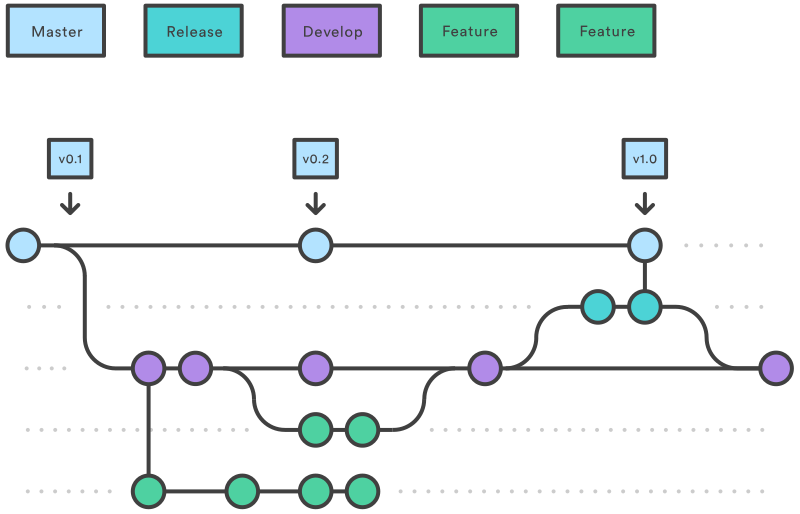
With the adoption of Git, we pretty much adopted the bog standard Git workflow, with the slight tweak of creating a new branch for each sprint. Developers would eagerly create and refactor code, raising pull requests into branch X and creating feature branches in their own private fork for their stories and dutifully worked on their items.


Git Flow

The Git Workflow is familiar to most…


The Git Workflow is familiar to most…On reflection, creating a new branch every sprint did seem like overkill. Lead developers did end up with the challenge of having to delete branches every so often to keep the branch listing manageable. Surely, if we had continued with this model a single development branch would have been reasonable.


Feature branches themselves proved to be troublesome. Developers would not merge back to the sprint branch very often. In the majority of cases, they would raise the request only once their feature was complete, regardless of splitting the story down. I’m sure you’ll not be surprised to read that merge conflicts were common, and quite often affected multiple files. Integration between pieces often occurred towards the end of a sprint, resulting in a slap bang attempt to fix any issues. Breaking the psychological need to only commit perfection beholden to the developer seemed impossible.


A Bright Idea


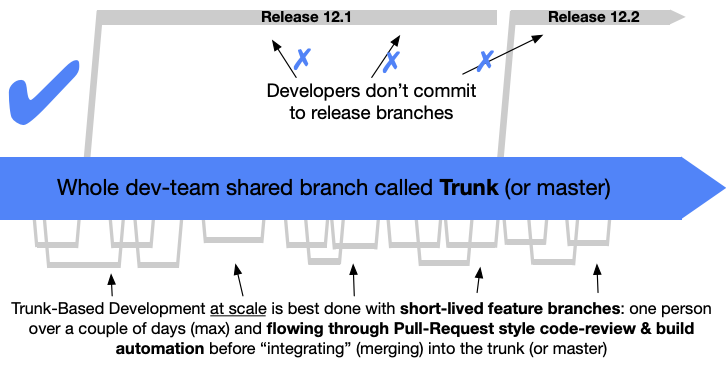
When the alternative approach of Trunk-based Development was proposed to us in a knowledge share, it was the classic cartoon moment of a light bulb sparking to life within my head. The premise was essentially the reverse of our approach at the time, where developers raise pull requests directly to master.


Trunk-based Development Flow

Trunk-based Development seemed like the bright idea to solve all those problems


As outlined at the Trunk-based Development home, developers merge directly to  master. Initially, I thought back to all those branches we had to maintain. All those large pull requests. The pain of dealing with merge conflicts every sprint. I got that usual thrill of excitement coursing through my veins common with every hair-brained scheme I propose in work.


Trunk-based Development Flow

As outlined at the Trunk-based Development home, developers merge directly to master


Adapting to Change


Trunk-based Development was initially adopted across a couple of teams. Adoption of a new branching strategy is significantly easier when a few of your colleagues are on the same knowledge share. The journey to date has certainly been interesting. The obvious benefit for leads was we no longer needed to create as many branches. In fact, thanks to the use of labels, we have been creating physical branches only in the event of hot fixes to a release, which are then merged back to master.


> The programmer, like the poet, works only slightly removed from pure > thought-stuff. He builds his castles in the air, from air, creating by exertion > of the imagination. > > Frederick P. Brooks Jr., The Mythical Man-Month: Essays on Software Engineering


One initial surprise was changing developer mindset in more ways than one. Adjusting to pulling the latest recently rather than getting caught up in the coding moment is something they were forced to adopt. It was no longer the case that they could work on building that castle without syncing up with the drawbridge being constructed by their colleague.


Diverging forks and merge conflicts also occurred more initially if developers didn’t raise pull requests regularly. They were forced to commit smaller pieces, while still adhering to the definition of done. This does result in more requests to review, but smaller reviews are definitely easier to understand.


These changes in behaviour, for the most part, seem to be holding. However, one thing that has not necessarily been eliminated is the use of feature branches by all. As their forks are their own, some do create branches sharing the story, or event sub-task name. Arguably that can increase the number of divergent branches a developer encounters in their fork. It also contravenes trunk-based best practice since they’re not pushing small frequent changes. But it seems in some ways that developers still like labeling a castle as a castle, or a tower as a tower. The question is if the same control is to be exerted over their private branches as it is over the trunk.


Thanks for reading!

Opening Pandora’s Box

The Challenges of Introducing User Personas

User personas are a challenging addition to the UX design stage that we have been incorporating into our agile development practice over the past few months. While taking the plunge into writing my first piece, I thought it apt to reflect on some of the unintended side effects introduced through encouraging developers to write realistic and reliable personas.


Persona Ownership


Completing these personas started out as a hair-brained scheme to get our developers talking more to our users. Developers are in a rather fortunate situation that our clients work in the same organisation. We have challenges where not all developers are co-located, but nothing that is a show-stopper for talking to users and eliciting what their jobs actually entail.


Providing a template was intended to give a common specification of how to document the discoveries developers made by talking to users. Potentially even to frame conversations going forward. We were quite surprised to find developers emailing the persona directly to the user, asking them to fill out their own role.


I get it. It’s certainly the easy way to get an accurate set of responsibilities, challenges and goals. It did certainly lead to questions who gets the credit for persona creation: developer or user? However, doesn’t it detract from the journey of finding out the processes themselves? Arguably it could seem like a one off exercise. Since user responsibilities and processes evolve over time, we need developers to keep them up to date. Only by regularly engaging users in person, or over the phone in the case of remote developers, can we maintain accurate user representations.


When Users Find Out


Given developers shared the template out to some key stakeholders, it was no surprise that users and managers alike quickly found out about the personas we had written. What surprised me in particular was the range of reactions that were exhibited.


Kevin McCallister

Unlike Kevin, users were happy rather than shocked about our persona experiment!


The majority of stakeholders applauded our initiative. They could clearly see the value in engaging with them directly, and how it could help us identify new stories to address their challenges and improve their working lives. Others questioned why we had not always done this, and engaged their teams to collaborate with us and help us bring the details up to date.


However, the other side of the coin definitely introduced some challenges. Some individuals did seem rather reticent. Divulging challenges in your role did seem to be considered by some as complaining, the last of which you want your boss to see. Arguing for users to be identifiable rather than anonymous partially contributed to this concern since we included their mugshot as part of the template. However, the value of having an identifiable contact that users can empathise with seemed important. Especially given the majority did consider being a person more of a badge of honour!


Too Much of a Good Thing


Pandora’s box has been open for a few months now, and despite a few locusts making their way out, we’ve certainly seen manly positive aspects. Developers are now able to better identify the precise user for the features they build. Their knowledge of business processes has vastly improved, along with many arranging regular day in the life sessions with key stakeholders to share their new found knowledge. The quality of user stories written have vastly improved, with the benefit of each story listed more often than not.


Where's Wally?

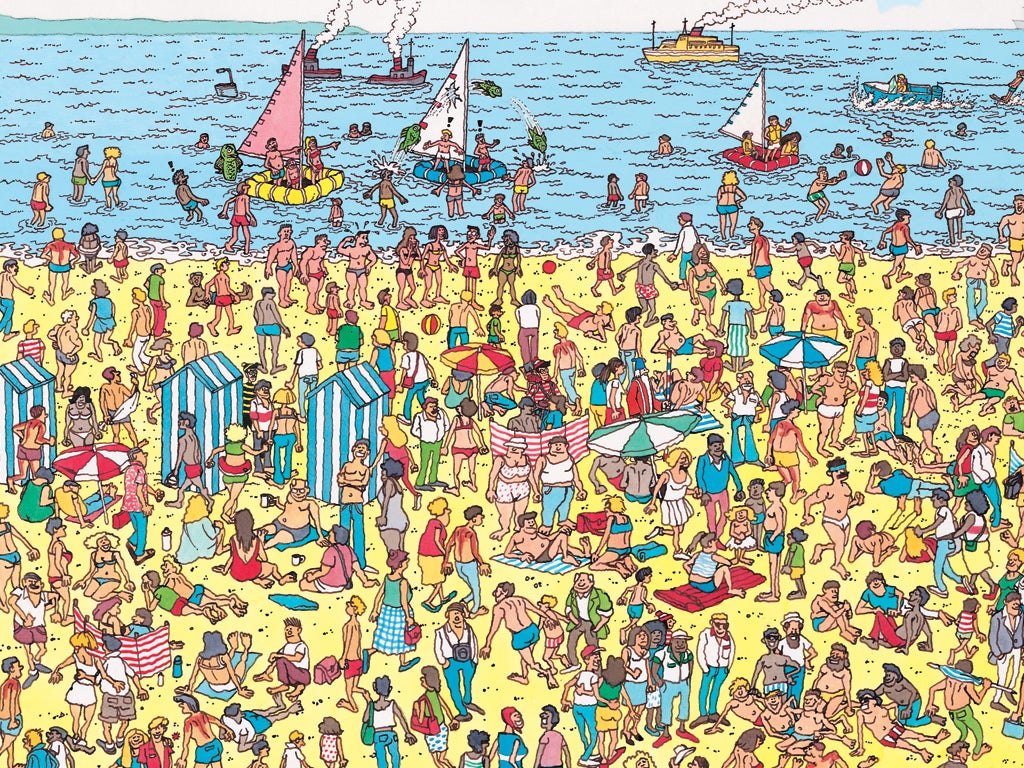
Where’s Wally is over 25 years old, but we’re struggling to find him in our persona list!


Like everything, you can have too much of a good thing. There is certainly an element of persona explosion happening right now. This makes finding the right persona at times like a game of Where’s Wally!


Part of this issue can be attributed to our challenges of collective persona ownership. It’s OK to edit a persona created by someone else! Another is just not checking what personas have been entered already. However, so far the experiment is holding well, and we are certainly reaping the benefits!


Thanks for reading!